
Making Your Elderly Parents’ Home Safer
As our parents age, the home they’ve lived in for decades can quietly become a source of risk. Changes in mobility, balance, vision, memory, and reaction time mean that everyday features—stairs, rugs, lighting, even kitchen appliances—can pose real dangers. The good news is that many of the most effective safety improvements are simple, affordable, and non-intrusive.
Making an elderly parent’s home safer isn’t about taking away independence. It’s about supporting it. Just don’t be like me and wait for some “close-calls” to happen before you start making these simple updates. Ideally, you should have a professional safety assessment performed on your home because it will likely point out things you never would have thought of. In my case, the assessment was done by an at-home Occupational Therapist.
Why Home Safety Matters More With Age
Falls are the leading cause of injury-related hospitalizations among older adults. Add cognitive challenges like dementia, slower reflexes, or medication side effects, and the risk increases significantly. A safer home environment:
-
Reduces falls and injuries
-
Supports independence and confidence
-
Lowers caregiver stress
-
Helps aging parents stay in their own home longer
- Prevents catastrophic house fires
Start With Fall Prevention
1. Remove Tripping Hazards
-
Secure or remove loose rugs
-
Eliminate clutter from walkways
-
Tape down or reroute electrical cords
-
Keep frequently used items within easy reach
2. Improve Lighting Everywhere
-
Replace dim bulbs with brighter, warm LED lights
-
Add nightlights in hallways, bathrooms, and bedrooms
-
Install motion-sensor lights in key areas
Poor lighting is one of the most overlooked fall risks.
Kitchen Safety Matters (A lot)
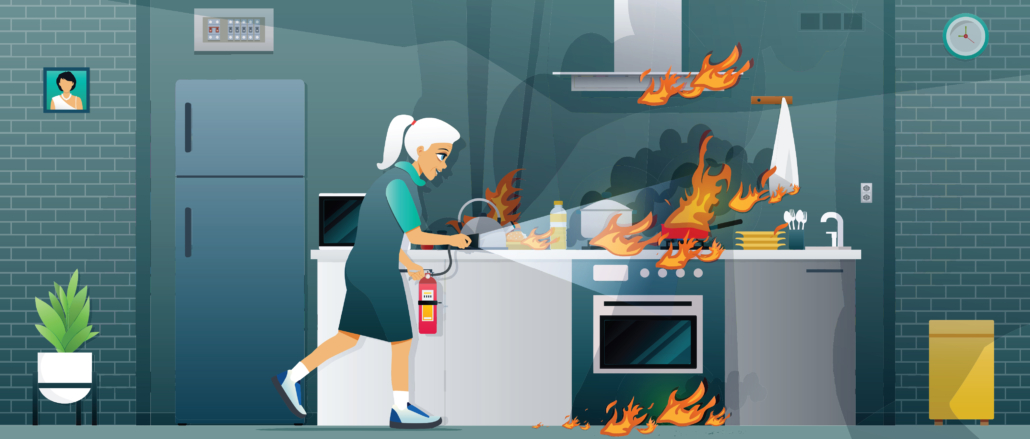
The kitchen is another high-risk area, especially for fires and accidents. In my case, three close calls caused me to make some changes.
- This one frightened and injured me. I heard a loud crash in the kitchen one day, so I ran upstairs and found her standing over a dinner plate that had shattered all over the floor. I assumed she just dropped it, so I reached down to pick up a large piece of the broken plate, and it burned my fingers. After I yelled, I asked why the plate was so hot, and she just gave me a blank stare. Then, I looked at the stove and noticed there wasn’t a frying pan on it. So I asked her if she cooked her eggs on the plate, and she said, “Yes, why?” – like it was something she did every day. This was when I took the knobs off the stove.

- I noticed she was attempting to cook on the stove, using a frying pan with the food inside a small plastic garbage bag.
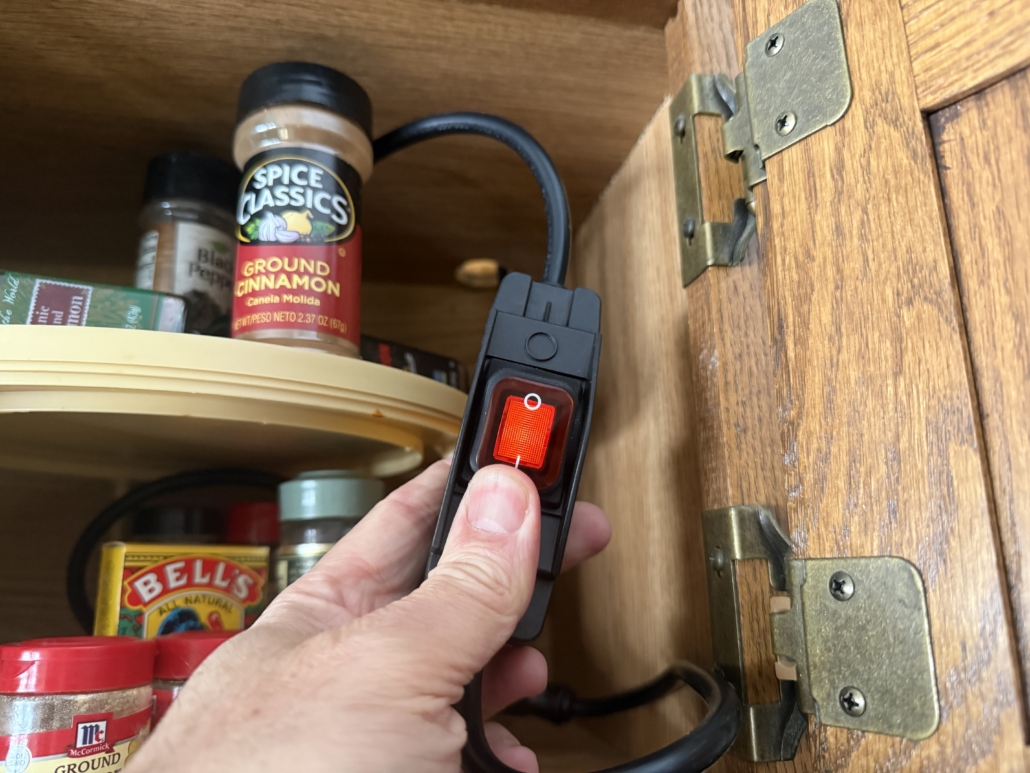
- Have you ever put a large metal sauce pot in a microwave? My mom did. This is when I got a small extension cord with an on/off switch to plug the microwave into. This allowed me to turn the microwave on whenever I needed it, but I kept it off whenever I wasn’t using it. Luckily for me, the microwave was plugged into an outlet inside a cabinet high above the microwave, where only I could reach it.
Smart adjustments:
-
Consider removing the stove knobs.
-
Plug the microwave into a hidden extension cord that has an on/off switch.
-
Use appliances with automatic shut-off
-
Remove step stools (or supervise their use)
-
Store sharp tools in easy-to-reach, clearly marked areas
-
Set water heaters to safe temperatures
-
Consider induction cooktops that stay cool
- Make sure all fire extinguishers are up-to-date
Make Bathrooms Safer (Highest-Risk Room)
Bathrooms are a major source of falls due to slippery surfaces.
Key upgrades:
-
Install grab bars near toilets and in showers
-
Use non-slip mats inside and outside the tub
-
Consider a walk-in shower or tub
-
Add a shower chair and a handheld showerhead
-
Raise toilet seats for easier sitting and standing
These changes alone can dramatically reduce injury risk.
Improve Stair and Entryway Safety
-
Install sturdy handrails on both sides of stairs
-
Add non-slip treads to steps
-
Ensure stair edges are clearly visible
-
Remove thresholds or add small ramps at entryways
-
Keep outdoor paths well lit and clear of debris
If stairs are becoming difficult, it may be time to consider:
-
A stair lift
-
A bedroom relocated to the main floor
Support Memory and Orientation
For parents with memory issues or early dementia, safety is also cognitive.
Helpful additions include:
-
Large clocks showing day, date, and time
-
Clearly labeled drawers, doors, and cabinets
-
Simplified layouts (fewer objects, fewer choices)
-
Consistent placement of everyday items
Reducing confusion reduces anxiety—and accidents.
Use Technology Thoughtfully
Modern technology can quietly improve safety without being intrusive.
Consider:
-
Medical alert systems or fall-detection wearables
-
Smart smoke and carbon monoxide detectors
-
Video doorbells for visibility and security
-
Smart plugs to turn appliances off remotely
The goal is support, not surveillance.
Don’t Forget Emergency Preparedness
-
Keep emergency numbers clearly posted
-
Store medications in organized, labeled containers
-
Ensure smoke detectors are working and tested
-
Create a simple emergency plan
-
Keep flashlights easily accessible
Involve Your Parents in the Process
One of the most important steps is including your parents in safety decisions. Changes feel less threatening when they’re part of the conversation.
Frame improvements as:
-
“Helping you stay in the house.” This usually hits hard because it makes them motivated to do whatever is necessary to stay in their home.
- “Keeping you out of the hospital.” If your parent has already been in the hospital a few times, chances are they’re not a fan.
-
“Making things easier.”
-
“Reducing unnecessary risks.”
Respect and collaboration go a long way.
Final Thoughts
Making your elderly parents’ home safer doesn’t require a full renovation or dramatic changes. Small, thoughtful adjustments can prevent serious injuries, reduce stress, and allow your parents to age with dignity in a place they love.
A safer home is not about limitation—it’s about peace of mind, for them and for you.
Related Posts
 https://theelderlyparent.com/wp-content/uploads/2025/06/creatine.jpg
1200
1800
Chris Gieger
https://theelderlyparent.com/wp-content/uploads/2024/12/elderly-parent-logo-1.jpg
Chris Gieger2025-06-08 23:44:132026-02-03 15:57:18Potential Benefits of Creatine for Alzheimer’s
https://theelderlyparent.com/wp-content/uploads/2025/06/creatine.jpg
1200
1800
Chris Gieger
https://theelderlyparent.com/wp-content/uploads/2024/12/elderly-parent-logo-1.jpg
Chris Gieger2025-06-08 23:44:132026-02-03 15:57:18Potential Benefits of Creatine for Alzheimer’s https://theelderlyparent.com/wp-content/uploads/2024/12/ADHD-scaled.jpg
1091
2560
Chris Gieger
https://theelderlyparent.com/wp-content/uploads/2024/12/elderly-parent-logo-1.jpg
Chris Gieger2024-12-31 00:22:412026-02-03 16:00:44Alzheimer’s + ADHD Is No Joke
https://theelderlyparent.com/wp-content/uploads/2024/12/ADHD-scaled.jpg
1091
2560
Chris Gieger
https://theelderlyparent.com/wp-content/uploads/2024/12/elderly-parent-logo-1.jpg
Chris Gieger2024-12-31 00:22:412026-02-03 16:00:44Alzheimer’s + ADHD Is No Joke
